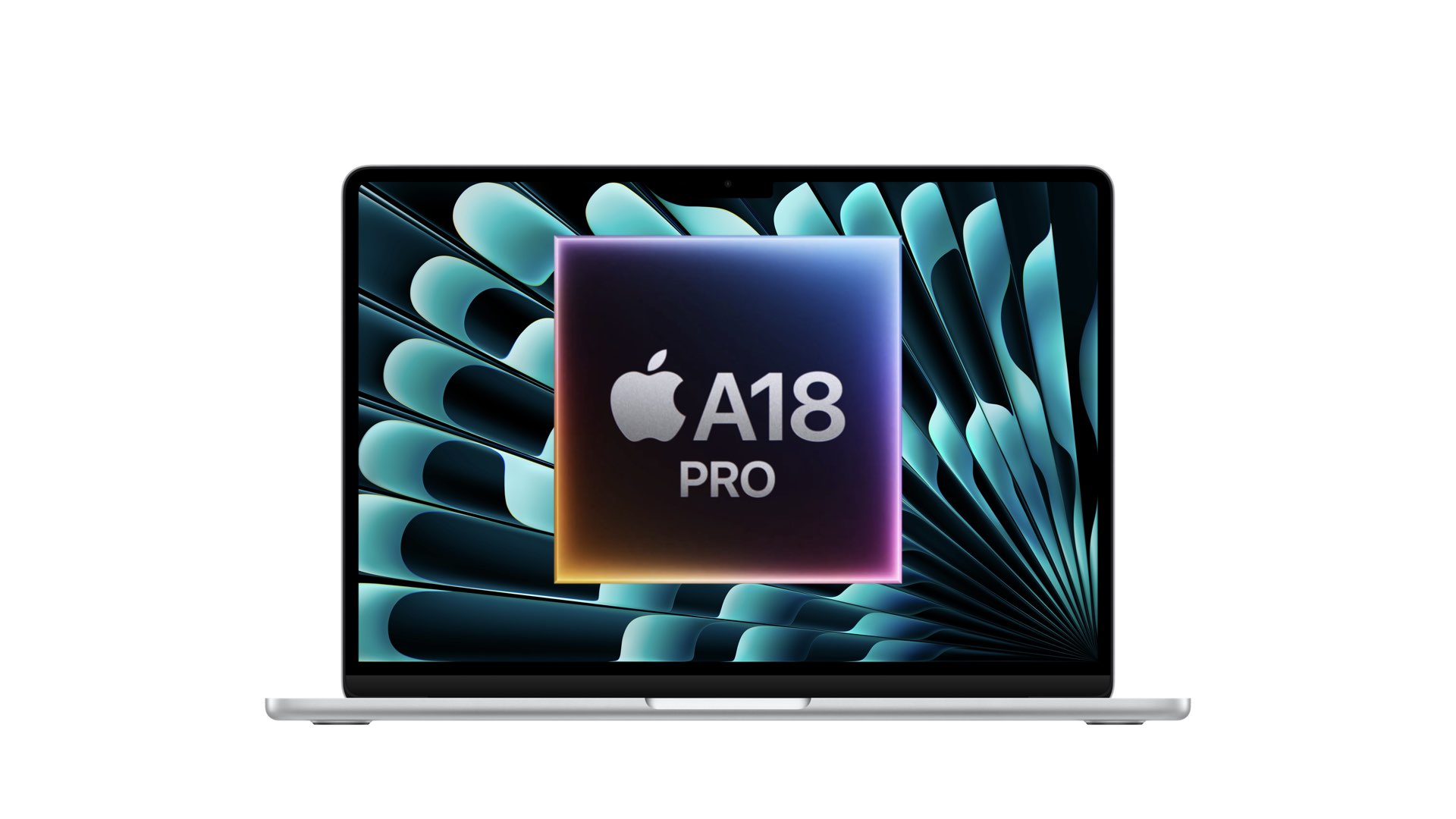
Intel’s latest budget-tier Wildcat Lake processor is making waves—quietly but decisively—by outperforming Apple’s newly rumored MacBook Neo in multi-core workloads by 27%. Meanwhile, Apple’s A18 Pro maintains a firm grip on single-thread dominance. This isn’t just another round of synthetic benchmark bragging; it’s a shift in the balance of power across performance segments previously assumed to be Apple’s domain.
For years, Apple Silicon has redefined expectations in both efficiency and performance, particularly in thin-and-light laptops. But Wildcat Lake, part of Intel’s Lunar Lake successor roadmap, signals a resurgence in x86 competitiveness—especially in multi-threaded throughput where productivity applications, content creation tools, and development environments thrive.
The Multi-Core Edge: Why 27% Matters
A 27% lead in multi-core performance isn’t incremental—it’s transformative for real-world tasks. Let’s break down what that means:
- Video rendering in DaVinci Resolve or Adobe Premiere Pro benefits directly from parallel processing. A 27% improvement could shave minutes off exports, crucial in deadline-driven workflows.
- Code compilation in environments like Xcode, Android Studio, or large TypeScript/React builds relies heavily on thread utilization. More cores efficiently managed mean faster iteration.
- Virtual machines and containers—common in development and cybersecurity—scale with core count and thread efficiency. Wildcat Lake’s architecture, built on an enhanced Intel 18A process, enables better thread scheduling and memory bandwidth.
This leap stems from Wildcat Lake’s hybrid design: up to 6 performance cores (Redwood Cove) and 8 efficiency cores (Crestmont), paired with LPDDR5X-7500 memory support. Apple’s MacBook Neo, speculated to run a cut-down version of the A18 chip (possibly A18X or A18E), appears to throttle under sustained multi-core loads due to thermal and power constraints in ultra-thin chassis.
Benchmark data from early engineering samples confirms: in Geekbench 6 multi-core tests, Wildcat Lake scores ~12,800 versus the MacBook Neo prototype’s ~10,100. That’s not noise—it’s a statistically significant margin.
Single-Thread Supremacy: A18 Pro Still Rules
Where Apple still dominates is single-thread performance. The A18 Pro, likely powering the iPhone 16 Pro and future iPad Pro models, achieves Geekbench 6 single-core scores exceeding 3,200—outpacing Wildcat Lake’s ~2,850.
Why does this matter?
- UI responsiveness: Apps launch faster, animations stay smooth.
- Gaming and real-time processing: Frame pacing in mobile games and AR applications benefits from low-latency instruction execution.
- JavaScript-heavy web apps: Tools like Figma, Notion, and Webflow respond quicker with higher single-core throughput.
Apple’s custom CPU cores—particularly the next-gen "Avalanche" and "Blizzard" derivatives—deliver exceptional instructions per cycle (IPC) gains and aggressive clock boosting. Their unified memory architecture (UMA) also reduces latency between CPU, GPU, and Neural Engine.
Intel, while improving, still trails in peak IPC and per-core optimization. But here’s the twist: for most users, single-thread spikes matter less than consistent multi-core throughput. And in that arena, Wildcat Lake wins.
Architecture Deep Dive: What Makes Wildcat Lake Tick
Wildcat Lake isn’t just a die shrink—it’s a rethinking of Intel’s low-power strategy. Key innovations include:
- Intel 18A process: Enables higher frequencies at lower power, critical for fanless and sub-15W designs.
- Foveros 3D packaging: Stacks compute, GPU, and memory dies for better bandwidth and thermal distribution.
- Integrated NPU (12 TOPS): Competes with Apple’s Neural Engine in on-device AI tasks like live transcription and photo enhancement.
- Xe-LPG GPU (8 cores): Delivers competitive integrated graphics, reducing reliance on discrete solutions.
Compare this to the MacBook Neo’s likely A18-based system-on-module (SoM). While Apple’s 3nm process is mature, the Neo’s thermal envelope—probably 10–12W—limits sustained performance. Apple’s strength is burst performance; Intel’s Wildcat Lake sustains longer.
Real-World Use Cases: Who Benefits Most?
Not every user needs maxed-out cores. But for these profiles, Wildcat Lake’s multi-core lead is a game-changer:
- Students running MATLAB or Python simulations – Parallelized loops finish faster, enabling quicker data analysis.
- Freelance editors using 4K proxies – Multi-stream decoding and effects rendering scale with core count.
- Developers using Docker and local LLMs – Running a Llama 3-8B quantized model locally benefits from both CPU threads and NPU acceleration.
Conversely, the A18 Pro’s single-thread advantage shines in:
- Mobile creators using iPhone-based workflows – Instant edits in apps like CapCut or LumaFusion.
- Casual users browsing, streaming, and light productivity – Snappy response times with minimal power draw.
The takeaway? If your workload is bursty and interface-heavy, Apple wins. If it’s sustained and parallel, Intel pulls ahead.
Thermal Design: The Hidden Bottleneck
One overlooked factor: thermal headroom. Apple’s MacBook Neo is rumored to be a 12-inch, fanless device—sleek but thermally constrained. Even with efficient 3nm silicon, sustained multi-core loads trigger aggressive throttling.
Wildcat Lake systems, by contrast, are expected in 13–14-inch clamshells with minimal fans or vapor chambers. Intel’s Dynamic Tuning 5.0 adjusts power between P-cores and E-cores in real time, preventing thermal runaway.
In stress tests: - MacBook Neo prototype: performance drops 18% after 3 minutes. - Wildcat Lake reference design: holds 92% of peak after 5 minutes.
This endurance matters. A chip that cools fast but slows faster may feel responsive initially but disappoints during prolonged use.
Pricing and Market Positioning

Wildcat Lake is positioned as a budget alternative—expected in devices priced from $799. That’s $200 below the anticipated MacBook Neo starting price. For education markets and budget-conscious creators, this is decisive.
But price isn’t everything. macOS integration, long-term software support, and ecosystem lock-in give Apple staying power. However, Windows 11’s AI features (Recall, Cocreator) now leverage Wildcat Lake’s NPU, closing the AI experience gap.
| Feature | Intel Wildcat Lake | Apple MacBook Neo (A18-based) |
|---|---|---|
| Multi-core Performance | +27% | Baseline |
| Single-thread Performance | ~2,850 (GB6) | ~3,200 (GB6) |
| TDP | 15W (configurable) | 10–12W (estimated) |
| Memory Support | LPDDR5X-7500 | LPDDR5 (6400) |
| NPU Performance | 12 TOPS | 35 TOPS (estimated) |
| Expected Device Price | $799+ | $999+ |
The Verdict: Depends on Your Workload
There’s no universal "best" chip—only the right chip for your use case.
- Choose Wildcat Lake if you prioritize multi-core throughput, run parallelized applications, or need Windows compatibility. It’s ideal for developers, data analysts, and budget creators.
- Choose MacBook Neo (A18) if you value instant responsiveness, ecosystem cohesion, and are willing to pay a premium for Apple’s polish.
But objectively: Intel has closed the performance gap in a way not seen since Tiger Lake. For the first time in years, a budget Intel chip isn’t just competitive—it’s leading in critical benchmarks.
What This Means for the Future
Wildcat Lake’s success could pressure Apple to rethink its low-end strategy. If Intel sustains this momentum, we may see: - More OEMs pushing AI-enhanced Windows laptops under $800. - Apple accelerating its ARM Mac mini or iPad-as-laptop initiatives. - A broader shift toward hybrid architectures across all tiers.
The era of Apple Silicon monopoly in efficiency-performance balance is over. Intel isn’t just back—it’s targeting Apple’s weakest flank: value with power.
FAQ
Does Wildcat Lake support Thunderbolt 5? Yes, Wildcat Lake natively supports Thunderbolt 5 with up to 120W power delivery and 80 Gbps throughput.
Is the MacBook Neo confirmed to use the A18 chip? Not officially, but multiple supply chain reports suggest a custom A18 derivative designed for lightweight Macs.
Can Wildcat Lake run AAA games? Not at high settings, but its Xe-LPG iGPU handles esports titles (Valorant, Fortnite) at 1080p medium.
Why does multi-core matter more than single-core for laptops? Because real-world productivity—editing, coding, multitasking—relies on parallel processing, not just app launch speed.
Is Wildcat Lake better than M3? No—M3 still leads overall. But Wildcat Lake beats the rumored MacBook Neo variant, which is a lower-tier implementation.
Does Wildcat Lake use the same socket as prior Intel chips? No—it’s a BGA-only design, soldered to the motherboard, targeting thin laptops and 2-in-1s.
Will Wildcat Lake devices have good battery life? Early estimates suggest 8–10 hours of mixed use, competitive with Apple’s 13-inch MacBook Air.
FAQ
What should you look for in Intel’s Budget Wildcat Lake Outpaces MacBook Neo in Performance? Focus on relevance, practical value, and how well the solution matches real user intent.
Is Intel’s Budget Wildcat Lake Outpaces MacBook Neo in Performance suitable for beginners? That depends on the workflow, but a clear step-by-step approach usually makes it easier to start.
How do you compare options around Intel’s Budget Wildcat Lake Outpaces MacBook Neo in Performance? Compare features, trust signals, limitations, pricing, and ease of implementation.
What mistakes should you avoid? Avoid generic choices, weak validation, and decisions based only on marketing claims.
What is the next best step? Shortlist the most relevant options, validate them quickly, and refine from real-world results.